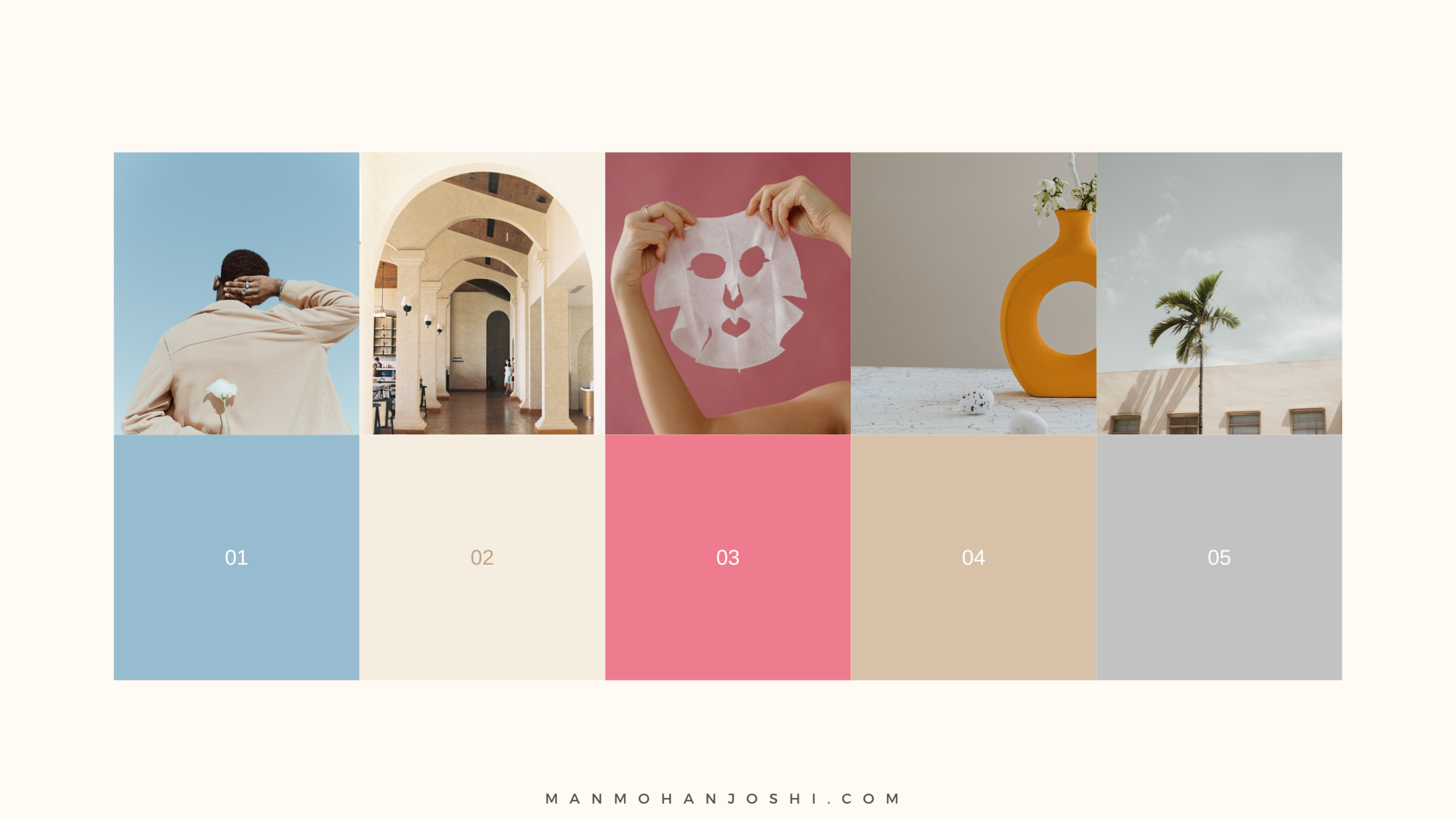
Image credit: Canva
A wide, open blue sky.
Its palette feels calm, balanced, and deliberate.
If nature uses its colours with such intention, can we do the same?
Art imitates nature.
— Aristotle

Nature is the ultimate minimalist. A photo from my recent expedition to Mount Panchachuli Glacier, Uttarakhand, India. Image credit: Author
Why Big Brands Choose Minimalism
IKEA relies on blue and yellow—trust, warmth, approachability.
Apple stays with white, black, and aluminium—simplicity, clarity, focus.
Each successful brand learns the art of communication by choosing less.
You are a brand too.
Why a Minimalist Closet Works
-
- Does this go together?
- Does this feel right today?
- Is this too loud? Too dull?
Have a defined closet palette. Stick to it.
-
- You get dressed faster, without that low-grade mental resistance.
- You stop buying clothes on impulse and start choosing with purpose.
- You look put together, not because you tried harder, but because things naturally work together.
It flows elsewhere:
-
- Into clearer thinking.
- Into problem-solving.
- Into actually getting things done.
Curating Your Minimalist Closet
It’s about wearing things that actually feel like you.
- Do you want to come across as calm or intense?
- Do you want to feel grounded, sharp, creative, or warm?
Simplicity boils down to two steps: Identify the essential. Eliminate the rest.
— Leo Babauta
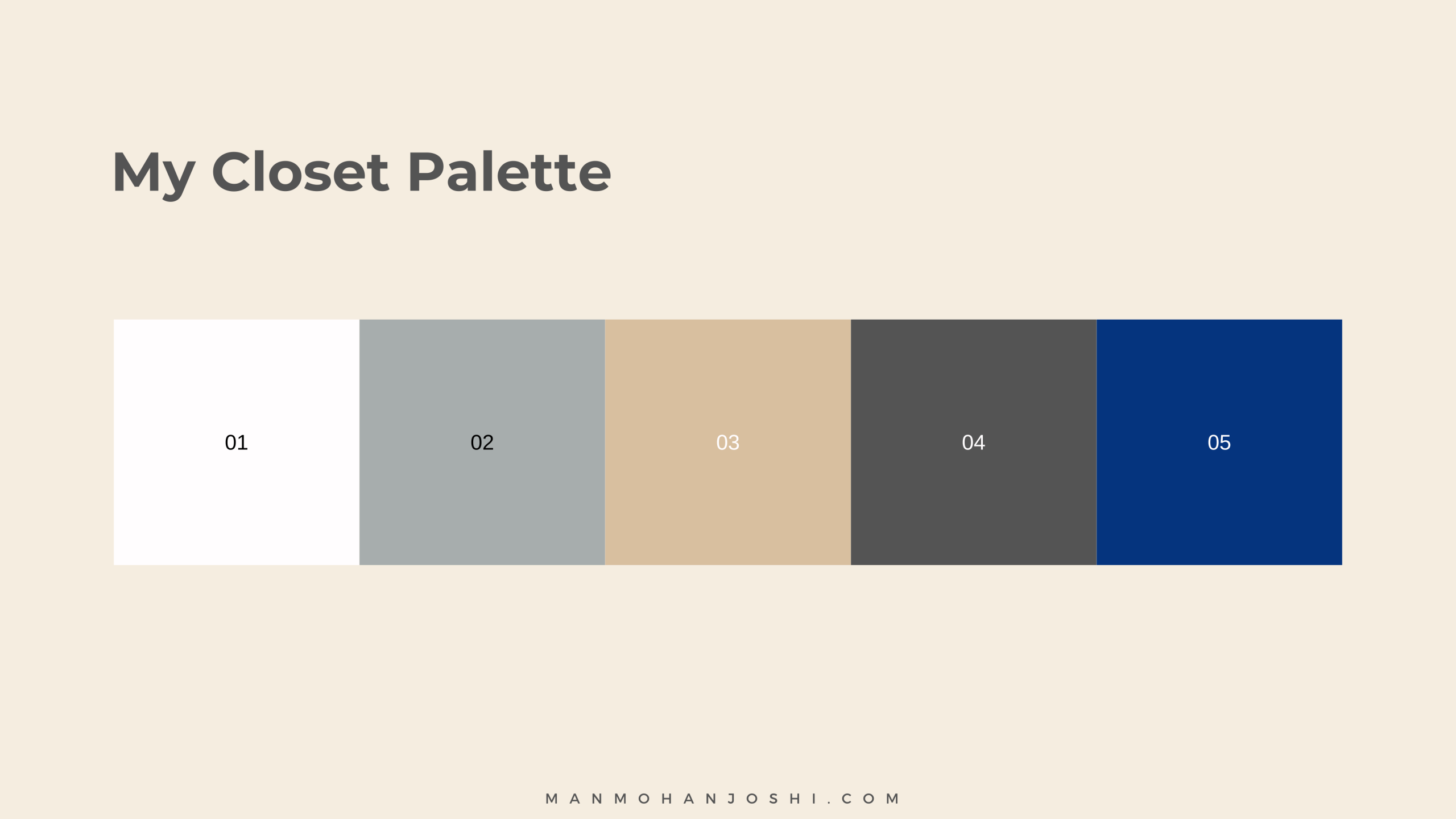
Illustration by the Author
References:
Elliot, A. J. (2015). Color and psychological functioning: a review of theoretical and empirical work. (Original work published 2015). Frontiers in Psychology. https://pmc.ncbi.nlm.nih.gov/articles/PMC4383146/
ABOUT THE AUTHOR
Manmohan is a Writer and Creator. He writes about discovering potential and purpose–through understanding ourselves– and the transformation journey that unfolds afterwards.
His newsletter, The Infinite Pivot, shares ideas on how to break the status quo and pivot from being the current to a greater version of ourselves (The Infinite You) that makes an impact.
Learn more
Keep reading
-
$2,600 — My First Big Payment From Writing
-
5 Quiet Lessons These Mountains Echoed
-
A Memoir of Indian Childhood in the 90s
-
Design Your Life in 5-Year Blocks
-
Gratitude Through Action, Not Just Words
-
I Tried Drawing Consciousness — Here’s How It Looks
-
Maslow’s Theory of Human Motivation in 10 Points
-
Pindari Glacier Expedition: When the Himalayas Taught Me About Purpose
-
The 5 Modes of Productivity: A Simple Way to Track Your Daily Bandwidth
-
The 7 Things You Truly Need in Life
Subscribe to my newsletter
The Infinite Pivot®
to keep receiving more thoughts like this, free.