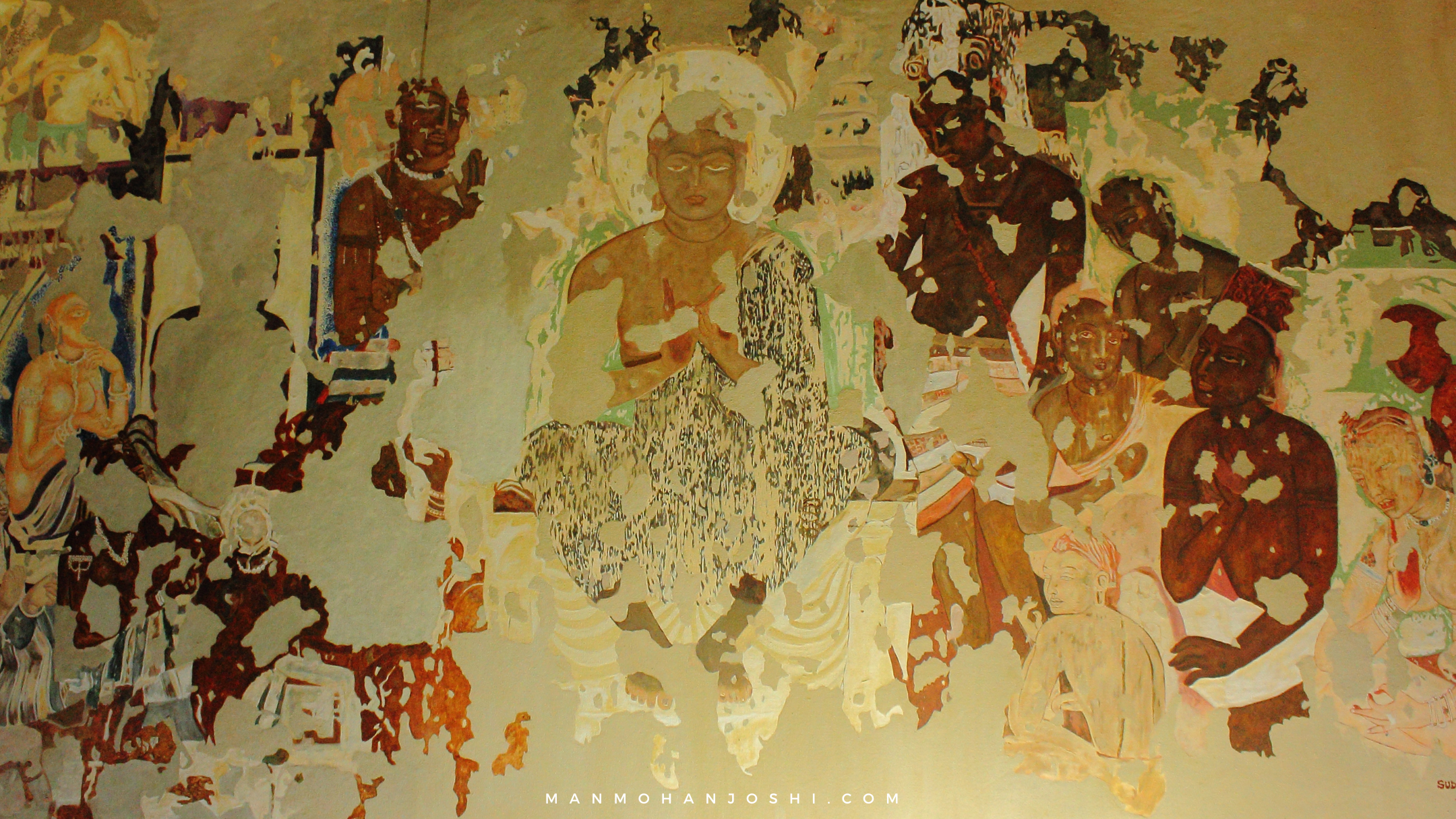
Image credit: Canva
Look at the image above — an ancient cave painting from the Ajanta Caves.
Nearly 2,000 years old.
Yet the faces still feel alive.
There is depth in the eyes. Stillness in the posture. A quiet completeness.
These were not distracted minds.
For centuries, monks lived, worked, and created in these caves. Life revolved around survival — and simple enjoyment. What remained after daily chores was given to community, craft, and contemplation.
No noise. No constant stimulation. No fractured attention.
Just presence.
Today, life is different.
We spend hours each day scrolling, watching, reacting, comparing.
And it doesn’t end when the screen turns off.
Two hours on your phone becomes two more hours in your mind — replaying, anticipating, comparing.
Slowly, something shifts.
The body remains here.
But the mind drifts elsewhere.
And over time, it becomes harder to bring it back.
So the real question is:
How do you stay present in a world designed to pull you away from it?
After reflecting on this for some time, I’m sharing two practical methods to help you get anchored in presence.
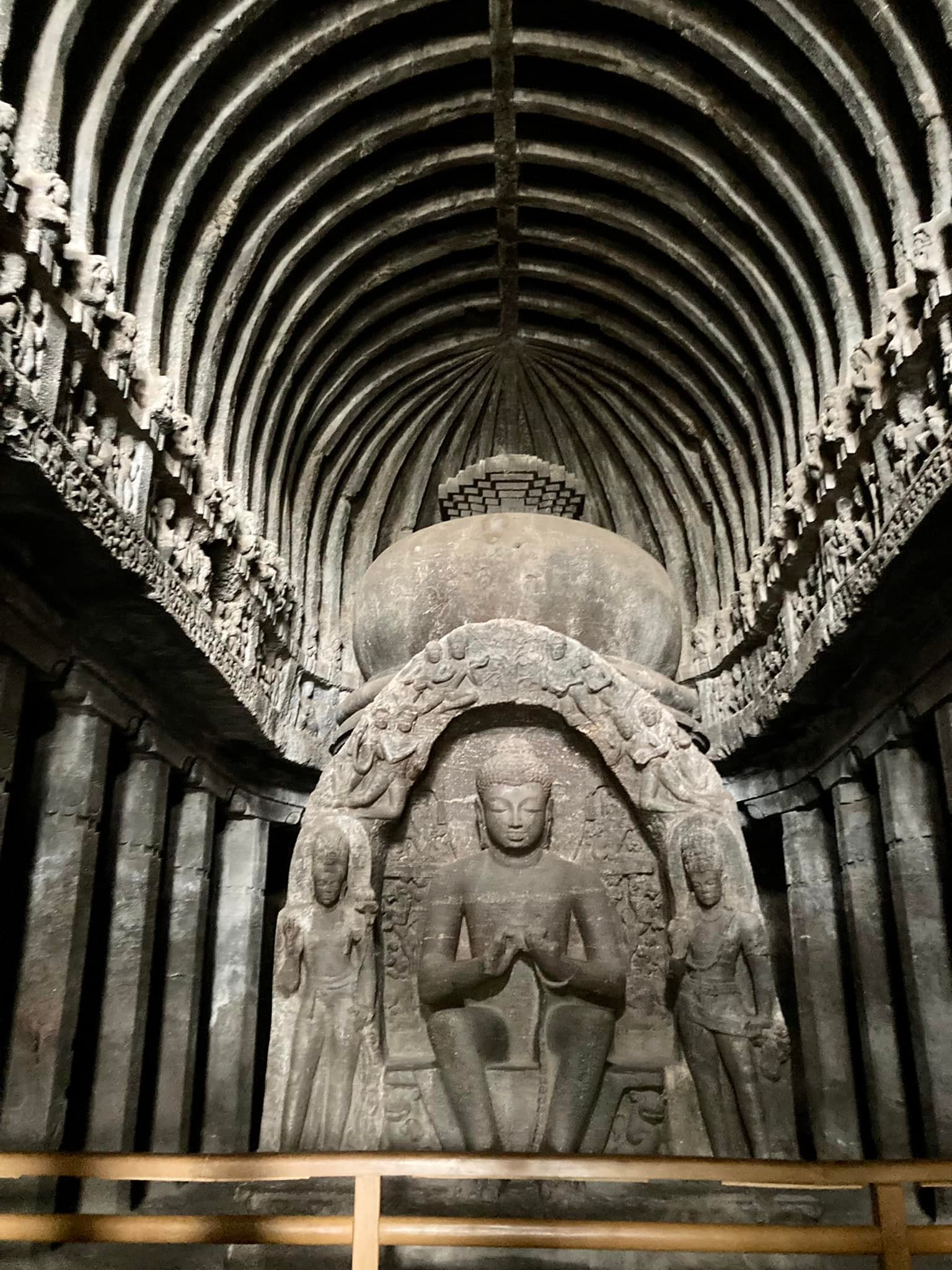
The Seated Buddha, Ajanta Caves, Maharashtra, India. Image credit: Author
First Things First — Understanding Presence
Much of what we understand today about presence has been articulated beautifully in Eckhart Tolle’s The Power of Now, along with its practical teachings in Practicing the Power of Now. What follows is my personal interpretation of how to live it in everyday life.
Presence is not just an idea.
I consider it a state of consciousness.
A state where awareness is direct, steady, and undivided.
Most people live in a thought-dominated mode — constantly interpreting, reacting, drifting.
Presence begins when that mental noise settles, even briefly.
You don’t need to master it.
You only need to return to it.
Read my previous article explaining different states of consciousness (including Presence) for a deep dive:
These 5 Consciousness States Are Quietly Shaping Your Life
Understand them today and watch your transformation flow naturally
manmohanjoshi.com
How to Remain Present
One word:
Breathe.
Across traditions, philosophies, and disciplines — everything points back here.
The breath is always in the present.
And wherever attention meets the breath, presence follows.
But “just breathe” is incomplete advice.
So here are two ways to practise it.
1. Breathe and Watch
Be aware of your breath.
And at the same time, observe — internally and externally.
Not analyse. Not interpret. Just observe.
Internally:
Notice your body.
Notice sensations.
Notice thoughts rising — and passing.
Externally:
Birds in motion.
Children playing.
Wind moving through trees.
The ability to observe without evaluating is the highest form of intelligence.
— Jiddu Krishnamurti
Let everything be as it is.
Your mind will wander. Let it.
Just watch.
The moment you observe without getting involved, you step out of thinking — and into presence.
2. Breathe and Immerse
Whatever you are doing — do only that.
Fully.
This is not about efficiency.
It is about wholeness.
Take a simple task — cleaning your shoes.
Feel the texture.
See the movement.
Watch the transformation.
For those few minutes, there is nothing else.
No past.
No future.
No divided attention.
Drink your tea slowly and reverently, as if it is the axis on which the earth revolves.
— Thich Nhat Hanh
Just action — done completely.
That is immersion.
An Example
In a recent journey to a secluded Himalayan village called Dantu (perched ~11K feet above sea level), I witnessed something quietly profound.
An elderly man was at work, completely absorbed in what he was doing.
In these remote communities, such chores are not trivial. They are essential. Skills of the hand still matter here, where life does not lean on modern tools.
He worked with calmness and composure.
No rush.
No distraction.
No fragmentation.
I was watching.
He was immersed.
A simple moment.
Video credit: Author
References:
ABOUT THE AUTHOR
Manmohan is a Writer and Creator. He writes about discovering potential and purpose–through understanding ourselves– and the transformation journey that unfolds afterwards.
His newsletter, The Infinite Pivot, shares ideas on how to break the status quo and pivot from being the current to a greater version of ourselves (The Infinite You) that makes an impact.
Learn more
Keep reading
-
$2,600 — My First Big Payment from Writing
-
5 Quiet Lessons These Mountains Echoed
-
A Memoir of Indian Childhood in the 90s
-
Design Your Life in 5-Year Blocks
-
Gratitude Through Action, Not Just Words
-
I Tried Drawing Consciousness — Here’s How It Looks
-
Maslow’s Theory of Human Motivation in 10 Points
-
Pindari Glacier Expedition: When the Himalayas Taught Me About Purpose
-
The 5 Modes of Productivity: A Simple Way to Track Your Daily Bandwidth
-
The 7 Things You Truly Need in Life
Subscribe to my newsletter
The Infinite Pivot®
to keep receiving more thoughts like this, free.